Renewable Feedstocks for a Lower Carbon Footprint
 PRODUCT CARBON FOOTPRINT
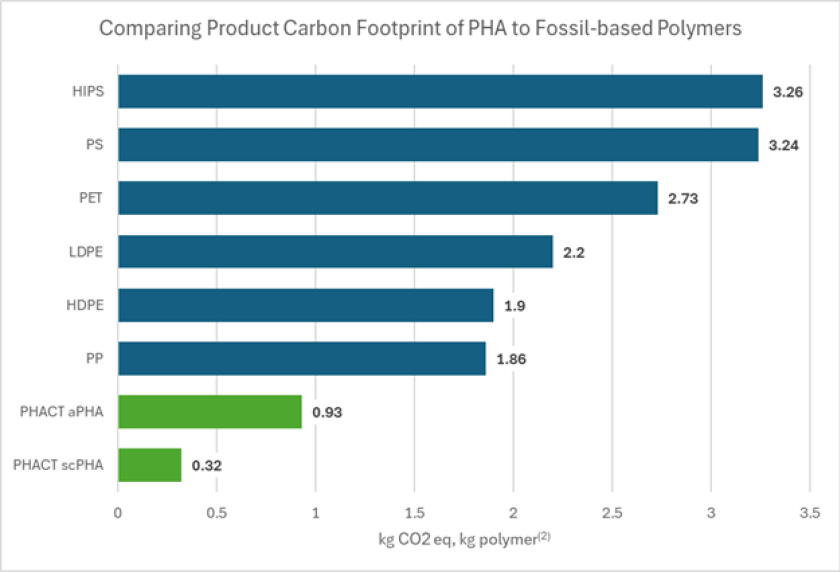
How does our PHA compare to fossil-based plastics?
In 2024, we published the first cradle-to-factory gate life cycle analysis for PHA from a commercial-scale manufacturer. That means our data takes into account all the variables unique to our manufacturing footprint from our sugarcane feedstocks to the energy running our facility. In 2026, we published an update to our Product Carbon Footprint (PCF) to align with our newly installed manufacturing technology. The new PCF demonstrates how through CJ’s unique fermentation capabilities, we are improving the quality of our PHA manufacturing process alongside lowering the carbon impact.
Downloads
LCA and PCF Resources
3rd party reviewed and verified LCA and Product Carbon Footprint data is available for PHACT™ PHA.